Practical English at Home! Educational English Games
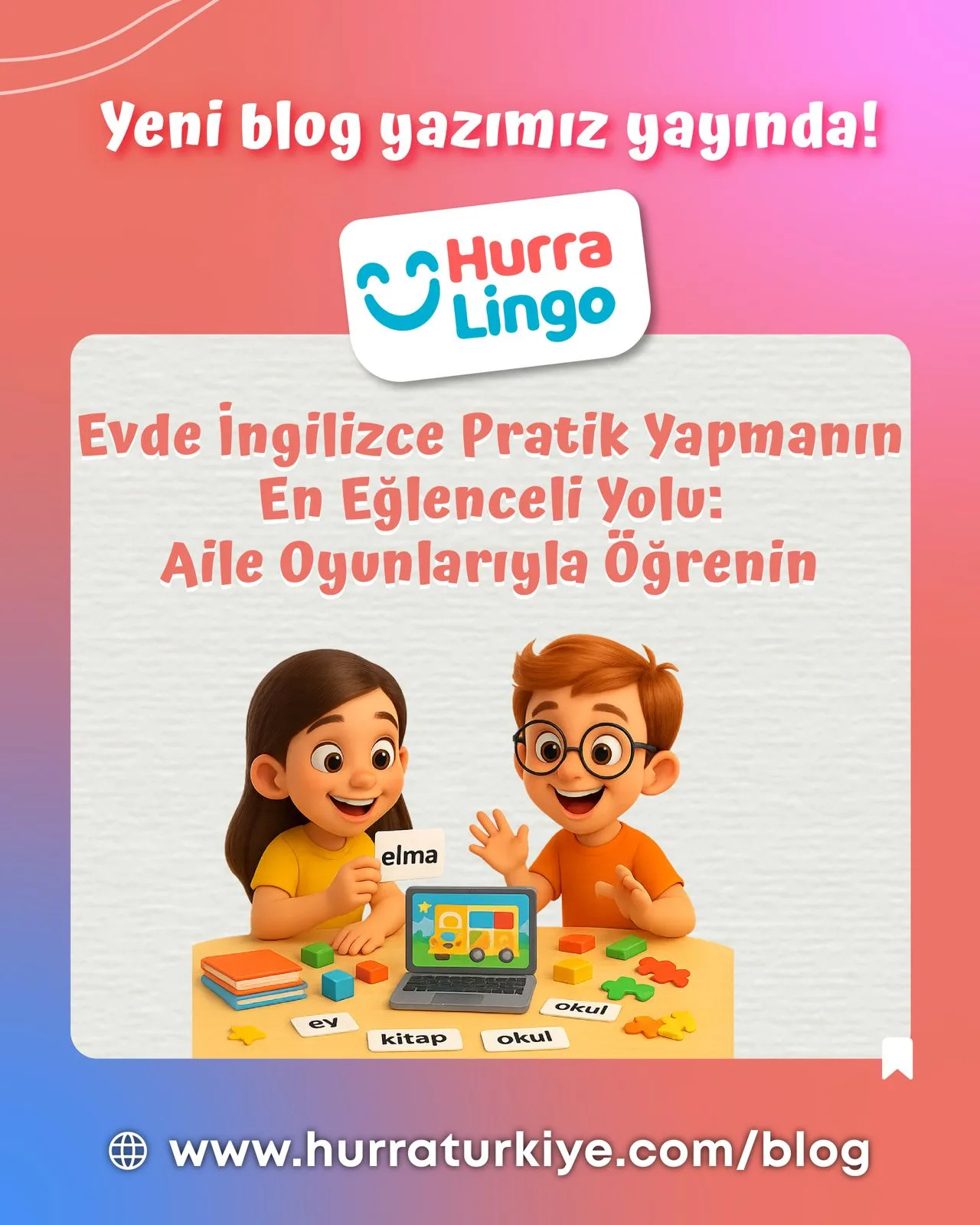
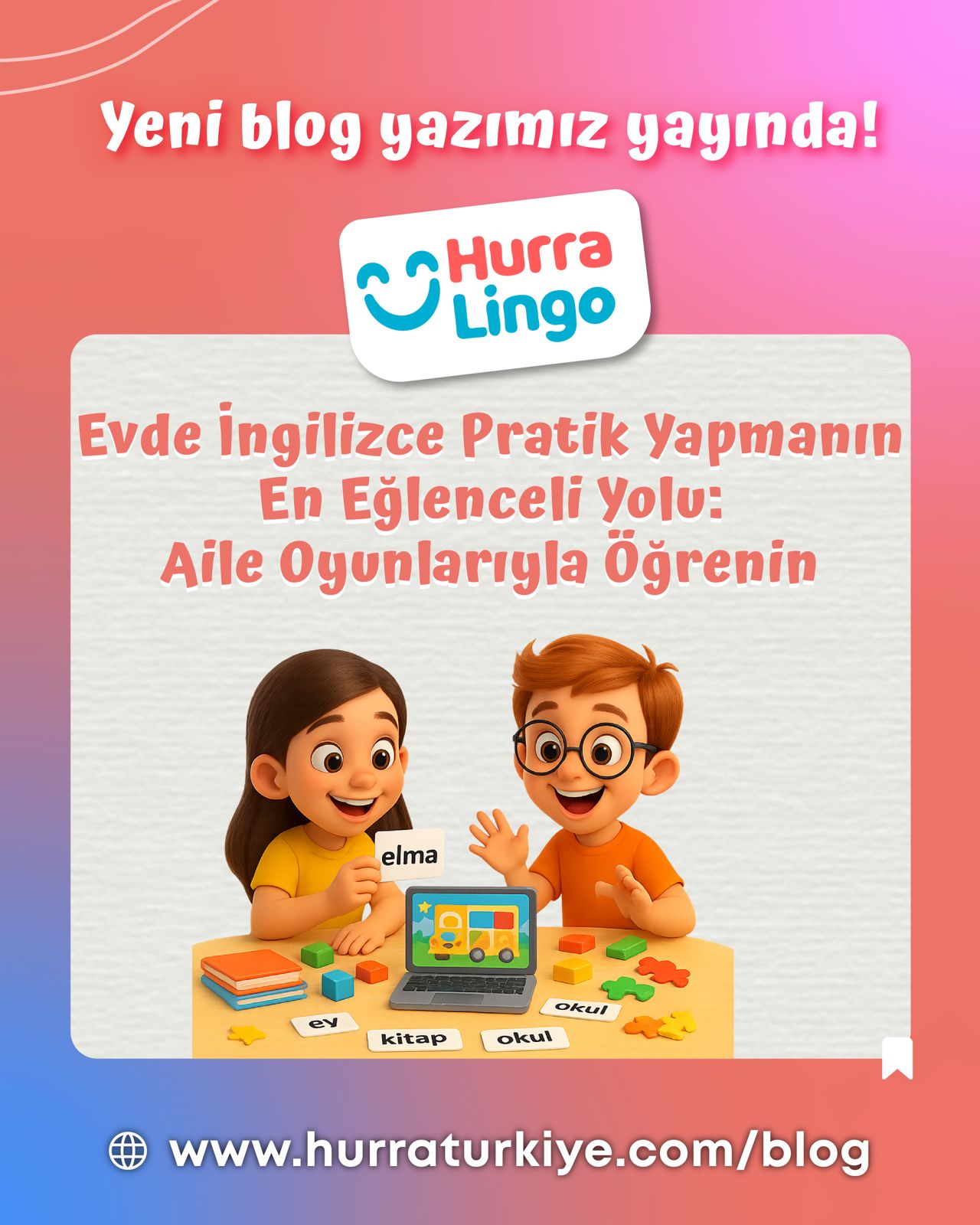
Practical English at Home!
Strengthen Your Child's English: 4 Simple Games to Play at Home
How to Support English Learning at Home?
English is a universal language that plays a major role in children's future academic and social lives. However, language learning does not only happen at school; The most effective learning environment is the home environment, where the child is comfortable and learns while having fun.
Teaching English at home with gamessupports children's natural language acquisition processes. This allows the brain to learn the language unconsciously, just like a native language.
As Hurra Lingo, we know that sustainable success in language teaching occurs in the triangle of education + interaction + entertainment.
Why Does Playing English at Home Strengthen Learning?
- Supports the Natural Learning Process:
While playing, children do not “try to learn” the language; language using learns. This makes learning permanent. - Provides Multi-Sensory Learning:
Different senses are involved, such as vision, hearing and movement. This strengthens brain connections. - Increases Parental Involvement:
Research shows that parents' active involvement is one of the most important factors in language development. - Increases Motivation:
The child is not afraid of making mistakes because he is not aware of learning while having fun. This increases self-confidence.
What Games Can You Play?
-
“Simon Says”
How to play:
One person commands by saying “Simon says…”
- “Simon says jump!”
- “Simon says touch your ears!”
If the command is given without saying "Simon says" and someone does it, that person is eliminated.
Educational contribution:
- Improves listening skills.
- Teaches attention and following instructions.
- Verbs (run, jump, touch) and body parts (eyes, nose, arms) are learned.
This game is a good example of the TPR (Total Physical Response) method — children learn by moving.
-
“Draw and Guess”
How to play:
A person chooses a word (for example: apple, car, sun) and starts drawing. Others guess in English:
- “Is it a cat?”
- “It's a tree!”
Educational contribution:
- Improves visual memory and vocabulary.
- Provides speaking practice.
- Teaches the natural use of interrogative sentences.
After each drawing, you can write new words on the cards and repeat.
-
“Word Hunt”
How to play:
Go on a word hunt at home!
- “Find something red!”
- “Find something that starts with S!”
Educational contribution:
- Colours, letters and object names are associated with daily life.
- It enables the child to learn to see his/her environment with English eyes.
Contextual learning ensures that words remain in long-term memory.
-
“Role Play”
How to play:
Recreate a grocery store, restaurant or doctor scene:
- “Can I have some apples, please?”
- “Here you go!”
Educational contribution:
- Teaches sentence patterns to be used in real life.
- It improves dialogue skills and pronunciation.
- It increases social interaction and self-confidence.
Choose a different theme each week: “At the supermarket”, “At the school”, “At the park”.
Pedagogical Recommendations for Parents
- Be a model, not a fixer.
Repeat the correct sentence naturally rather than immediately correcting mistakes.
❌ “No, that's wrong.”
✅ "Almost! You can say 'I'm playing with my toy.'"
- Set small goals.
5 new words every week is enough. Continuity is more important than speed. - Give positive feedback.
“Good job!”, “You said that perfectly!” Statements like these increase motivation. - Use technology supportively.
Interactive platforms such as Hurra Lingo reinforce the process by offering digital exercises that support the games.
Play is the Natural Teacher of Language
Learning English becomes permanent through experience, not by memorization.
Playing English games at home regularly helps your child internalize the language, gain self-confidence and make learning an enjoyable routine.
As Hurra Lingo, every child language learning We aim to make it a natural part of life.
Remember: Families that play together learn together.
 Free Trial Lesson